

This is my weekly post to bring you up to date on my world. I hope you find it interesting, informative, and/or entertaining. Last week I was recovering from a week at the Gathering of Friends (more below) and didn’t get to post the update; I’m back on track this week.
Writing Projects
1632 Novel
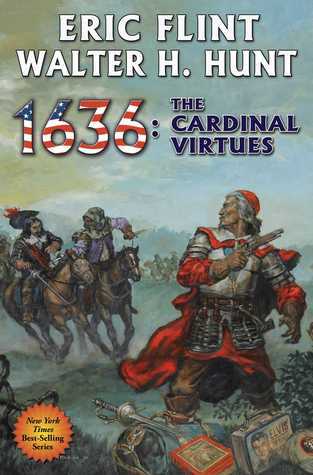
I am particularly occupied with a novel set in the 1632 Universe, for Baen Books. This is under contract and will likely be a 2013 release. It is set in 1636, and takes place mostly in the New World; this is a venue hitherto scarcely touched in the milieu, and I am pleased to have the opportunity to work with Eric Flint on this novel. Update: Eric and I are currently consulting on the book, and I hope to have news on this soon.
Elements of Mind
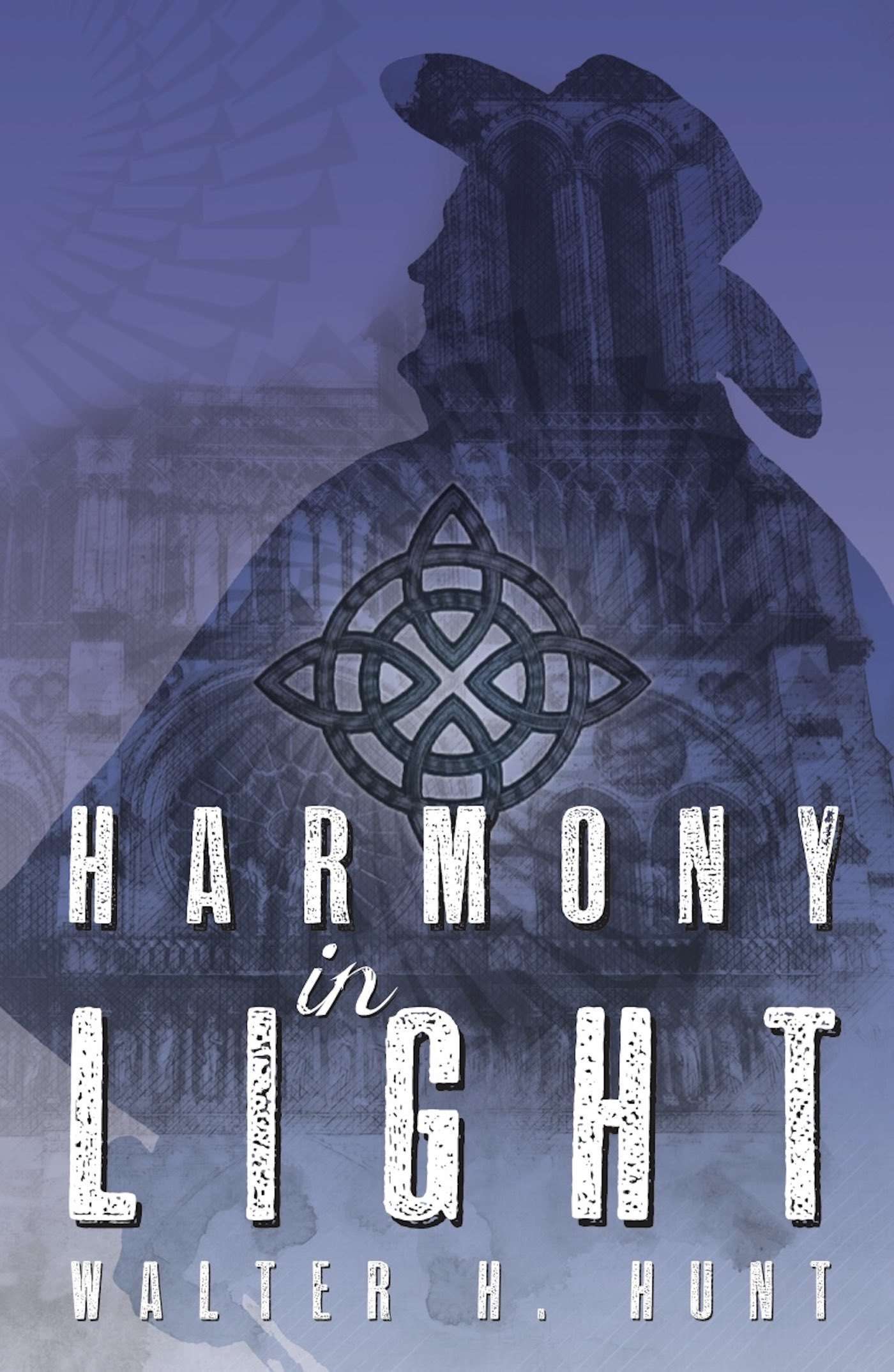
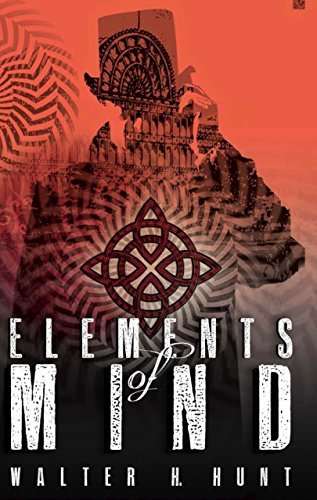
Two plus years ago I wrote a novel at lightning speed, set in the middle 19th century and dealing with the great pseudoscience, mesmerism. This novel has been well received by those reading it (or hearing excerpts at conventions). It is in an editor’s hands, and I hope to have good news on the subject in the next few months.
E-Books

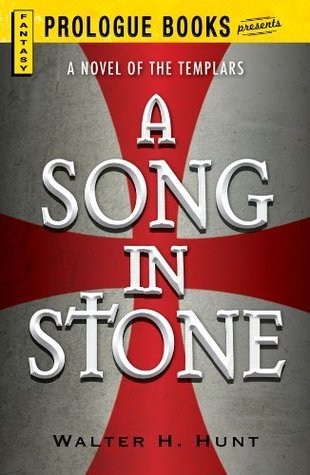
A Song In Stone is available in e-book form from Adams Media.
You can get it from Amazon.com, or from the Apple iBookstore.
My Dark Wing series will be appearing in e-book form in the Baen library later this year. Contracts for this effort have been signed; I will provide links when the e-books are available. Update: I have recently answered a few questions from a copy editor, who seems to be near the end of the third book, so I hope to have more news soon.
King and Country
The alternate-history novel (some of you may know it as the “Ben Franklin” novel) is on hold until the 1632 book is out the door. I want to get back to it later this year.
Other Writing
I contributed a short piece to Ring of Fire III, a collection of stories set in the 1632 universe. It’s only my second published short story. Torg say, short fiction HARD.
My most recent article in TROWEL Magazine is about Past Grand Master George M. Randall, and is entitled Apostle in the Wilderness. I will have an article in the summer issue on the ”Proceedings”.
Other Projects
Rails of New England was published last spring by Rio Grande Games and is getting good reviews from strategy gamers. Be sure to get the revised rules.
I will be at Origins at the end of May, working for Rio Grande, so if you’ll be there and the game interests you, come to our demo room.
Current Reading
I am still reading Gordon Wood’s history of the Early Republic, Empire of Liberty. It’s excellent, but will probably be the current book on the nighttable for the next few weeks. Update: Still working on it.
Gathering of Friends
I had a great time at the Gathering, and played a few games that I’d like to own. Here are a few capsule reviews. I added two albums to Facebook:
There are a number of excellent photo sets, far better than mine, that are also on Facebook.
Games
Note: All pictures are from Boardgamegeek and credit goes to the original posters.

A set-collection, network-connection, card play game involving Africa, sort of. Someone compared it to Valdora, a game I’ve not played, but which shares the little wooden ‘books’ that hold cards you can buy.
Like most Schacht designs, it’s light and colorful. But I didn’t feel that there was a lot of game there. So we’ll likely Pass.

A little Tom Lehmann card game. Simple, clever and fast. Our first game at the Gathering, and probably one I’d pick up. Buy.

Greg Daigle’s first published design. A good, well-designed resource manipulation game. It has three currencies: shells, fruit and . . . feet. Yep, feet. You use your feet to get to places where you can spend your shells. Fruit can take the place of either.
My first play felt fairly mediocre – another Euro. But I played it a second time and liked it better. We haven’t decided whether it’s one we’ll add to the collection, but it is clever and thematic and appears to have multiple paths to victory. Undecided.

Another game from Matthias Cramer, who brought us the tile-laying game Glen More in 2010 and the combat/competition game Lancaster in 2011.
There are some unusual elements here. Each player’s village is stocked with men and women, who must marry into other villages (no gettin’ down with your cousin in the cantons). Players therefore benefit from a sort of predatory cooperation. Once on a tile by placement or marriage, the meeple can be used to operate the tile – to produce or convert resources, or to do various other things. Players allocate actions up to the number of their deployed meeples on a number of characters, allowing building, waking up (did I mention that work puts you to sleep?), carrying goods to market, marrying, and midwifery (one child per season per married couple; they go off to school, and school graduates immediately enter the work force).
It’s quirky, and nowhere near as dark as Village; it has some interesting game to it, though I think it would be better with 4 than 3 – more choices, more paths. And, hey, look – Expansion Austrians offer yet another alternative! Who could ask for more? Undecided.

A modular placement game by The Donald, about 20 minutes in length. I had somehow avoided playing this game; L. played it a couple of times and found it interesting; I played it once and while I would not object to playing it – it’s moderately clever, inoffensive, and obviously different each play – it’s game popcorn, and not very exciting.
The problem is that while Dominion is a diamond, this game is a cubic zirconia. It’s attractive, it’s very marketable, it’s accessible to a wide range of people – but it’s a cubic zirconia. Pass.

Another Czech game, which was a near-final prototype last year. This game is based on the idea that players are trying to spend a certain amount of money in order to win a vast inheritance. The more dissipated you are, the better.
It’s very attractive and remarkably fun: given that it goes fairly quickly, I think it would fit with various game groups. L. and I both really liked it. Buy.
Mayan Age
Czech Games Edition has created some pretty damn innovative games, including the classic Through the Ages. Their new game, scheduled for a 2012 Essen release, is a Mayan-themed worker placement resource allocation game, with all of the usual tropes: victory point locations (temples), production (buildings), harvests to feed dudes, and the gathering of different kinds of stuff to build. The hook here is that the places where workers go are locations on interlocking gears, which all spin each round. It’s not just where you place your guys – it’s when they jump off the wheel. Buy.. We want this one.

The Donald’s other new game, produced by Scott Tepper’s Ascora Games. Players are mad scientists, trying to conquer the world (i.e., achieve a certain number of victory points); each turn a player chooses a role, allowing the increase of resources (hunchback minions, who have cute hunchmeeples; cards; or cash) or the addition of fiendish inventions that have all sorts of effects. In a sort of Vaccarino hallmark, each game is made different by the selection of two cards that provide rules for that game.
The art is charming; the hunchmeeples are amusing. The gameplay? Well . . . it’s important not to take a game like this too seriously. The game is a race, but falls short of our favorite race. L. liked the game more than I did, so we’re presently Undecided about this game.

It won a Canadian award. Yeah, baby. A simple placement game with a nautical theme. A little cleverness in selecting the right row or column – when there’s the right stuff there, and you have the right place to put it, and you have enough income in pearls to buy it . . . four game cynics playing the game at high speed didn’t give any of us a particularly warm feeling. Pass.

A game I backed on Kickstarter that turned out to be a bigger part of my Gathering than I’d expected. The guys at Clever Mojo Games sent me an advance copy, and I taught it quite a bit during the week. It was generally received very well – the components are very pretty: thick building tiles, nice wood markers. While I wouldn’t rate it a 10, it’ll have a place on my game shelf for a while. We own it.

Most of my experience with Stefan Feld games has been dismal. I’m not fond of most of his games, with the singular exception of Castles of Burgundy.
This year I had a chance to play Trajan, a complex interlocking worker/resource game with an interesting selection mechanic – mancala, played on your little player board. Pick up the little blocks and drop one on each spot, and wherever you stop – that’s what you do. Figuring out what everything is seems to be the first step (there are a lot of somethings). Planning your action is the second. But the real key is to think two turns ahead. There’s a lot of thinking, and thus the game is long – especially for AP-prone players.
I think there’s a lot of game there, though. So call this a Buy. Maybe.
Your family members want to get born, live well, and leave a good corpse – in the chronicles and not in an unmarked grave. A little sociopathic. No, actually a lot sociopathic. The trick is not to get the stuff you want: it’s to make sure your dudes die at the right time. Don’t let them cling to life; arrange their little meeple deaths.
Not sure what to make of it, except that while it was clever, I’m not sure I found it that compelling. Probably a Pass.

I am a big fan of Jambo, a 2-player game notionally based on African trading. It’s somewhat like a CCG, in that you get stuff into play and do things with it until one side or the other achieves a victory condition. But there’s no collectability; everything is already in the box. I had hoped that this game, visually similar to Jambo, would be a multiplayer implementation of one of our favorite 2-player games.
Not so much. It’s light and short, it’s got beautiful art (by Michael Menzel), it has Jambo’s parts: the resources, the gold, the cards – but it’s got more luck and less strategy. Regrettably, Pass.

The bean game, as a dice game. I mean, ffs, does every game have to have a dice implementation? Apparently so. I hadn’t realized that the base game needed to be simplified or speeded up, but this version does make it a little faster. Dice are rolled, and each player can take advantage of dice choices to advance themselves along a development card, cashing out when the time is right.
It is reasonably good, though, and it has a small form factor. It’s probably a Buy, adding to our incomplete collection of All Things Bohnanza.
Facebook Updates
April 18: Watch the gears on Mayan Age, the new CGE release. (See above.)
April 23: Redshirt zombies. “He’s undead, Jim.”
April 24: Zen GPS. “If you aim for it, you are turning away from it.”
April 24: A strange little article on “gay to straight conversion”. Most interesting to me: the article indicates that facilitators ask clients if there’s any Freemasonry in the family; because, you know, that promotes homosexuality. Apparently.
April 25: An article about the TSA suggests a certain amount of Charlie Foxtrot inside the agency. Though written by a security pro, apparently some readers were unimpressed. I thought it was fairly compelling.
April 25: Dante’s Internet. Nailed.
April 26: An article about the New York City photo archive, of 870,000 recently released photos. The site wasn’t ready for social media to perform an inadvertent DOS attack, so it was down when I went to look, but it may be up now.
April 26: I found my parents in the 1940 census.
April 27: My friend and publisher Ian Strock gives his account of the flight of the Enterprise over New York City. Later on, the shuttle gets caught in his hair like a piece of dandruff.
April 27: The talking stone head is explained.
April 30: Smart phone versatility is enumerated.
Upcoming Conventions and Appearances
May 25-28, 2012: I will be an attending author at Balticon 2012 in Hunt Valley, Maryland. I have not yet received a schedule.
May 30-June 3, 2012: I will be at Origins Game Fair in Columbus, Ohio. I’ll be working for Rio Grande Games.
June 30, 2012: I will be the guest speaker at Glenwood Lodge #65 in Glenwood Springs, Colorado. Looking forward to visiting the brethren there again.
August 30-September 3, 2012: I will be an attending author at Chicago Worldcon, the 70th Worldcon.
I have not made a commitment for a convention in the fall, but we are already signed up to attend San Antonio Worldcon on Labor Day Weekend 2013, and have presupported London in 2014.
Parting Words
I continue to appreciate the support and encouragement I receive from family and friends. The loss of a long time and close friend last fall reminds me as always how slender a reed life is, and how much I feel compelled (as the Masonic lecture says) to “contribute to the common stock of knowledge and understanding.” I try to say what I mean, to convey my affection rather than withhold it, and to be truthful and honest to those I meet as well as to myself.
Thank you for reading.


Origins 2010
It has been an interesting spring and summer and has come in steamy hot here in New England. I haven’t sent out a newsletter in a very long time, and the blog has suffered from a lack of updates; lots of things happening offline.
Enough of that – here’s a report of my recent trip to Columbus, Ohio, for Origins 2010. When I was at the Gathering of Friends in April, I asked Jay Tummelson, the president of Rio Grande Games, if there was an opening for a ‘booth monkey’, one of those folks who demo games at the summer conventions. I was delighted when he said that he could use both myself and the co-developer of New England Rails (forthcoming from Rio) at Origins in late June.
On the Job at Rio Grande
Conventions are no mean undertaking. An exhibitor must arrange everything from hotels and travel to tables and chairs, making sure everything is laid out properly on the show floor – it’s an opportunity to meet current (or potential) customers and to give them an impression of your products. By extension, you are giving them an impression of your company. The responsibility for conveying this impression devolves, in part, upon the booth monkeys as well. Wear the logo shirt, become an ambassador.
Never a Fashion faux pas
Greg P. and I, pictured above in our fine Rio Grande logo shirts, had never done a convention together. He’s been a fellow traveler a few times, but we’d never been both on the spot. It’s been more than 20 years since I was in an exhibitor booth at a game convention; it was Greg’s first time. Neither of us had ever worked for Rio Grande before.
Rio Grande produces a lot of games. Many of its offerings are English-language versions of games produced by overseas companies such as Hans im Glück, Amigo or Alea; I joke that Jay has caused gamers to no longer need to speak German anymore. (Indeed, there’s a t-shirt that reads: All the German I need to know I learned on BrettSpielWelt.) Others are original with Rio Grande, such as our game and one of the current rock stars of the hobby game industry, Dominion.
What characterizes a Rio Grande game is nice presentation, good components and elegant game play. The gatekeeper of the Rio Grande logo, Jay Tummelson, is careful and judicious. He chooses games that he feels best represent these style. He also chooses games that he likes. He has quite a few years in the industry, so his opinions have weight. The success and popularity of games with that logo certainly validates them.
So. Back to Origins. We drove from eastern Massachusetts to central Ohio by way of friends in Harrisburg, so we left Tuesday morning and after an intermediate stop arrived in Columbus mid-afternoon on Wednesday, the day before the exhibit hall opened. Outside was beastly hot (and occasionally stormy); inside was cooler – and much louder, even though things weren’t going to get underway until the following day.
Calm. For now.
We were deployed near the entrance to the hall with a dozen tables. Other than Dominion, the games were Rio Grande’s new releases. Here’s a list:
Regrettably, Tobago wasn’t available. (That might be my favorite new Rio Grande release.)
Here’s the idea: a dozen games laid out on tables, ready to play. Gamers walk over and say, “I’d really like to learn to play Macao” (or Albion, or Havana, or even Dominion – yes, there were a number of people who hadn’t played it or even heard of it). The staffer’s responsibility is to sit down and teach the game, usually in ones of minutes, and get these folks playing the game. Not play the game; since there were twelve tables and only four or five staffers, it was important to be ready to jump to another table at any time. (I confess to making that mistake once or twice.)
Ones of Minutes
There are a number of pitfalls. First, staffers have to know the games. (We had the rules in advance, and had played a few of them; a few of us knew them all.) Over the course of a few days we became familiar with just about all, but there were times that it was necessary to find someone else to teach a particular game. Second, staffers have only a few minutes to get the players started: no half-hour rules explanations. Third, it’s necessary to quickly set up a game that might have been left partially played. In short: it’s necessary to get going quickly, engage the gamer competently, and know how to get back to the start position. Between 10 and 6, usually with an hour or two gap during the day, lather rinse and repeat.
Lather. Rinse. Repeat.
We each had our specialities. I wound up doing Assyria, Albion, Havana and Cardcassonne quite a bit, and never quite learned Krysis. We all did Dominion, and I think we all learned at least one game “on the fly”. We arrived early and usually left the exhibit hall footsore and worn out. These are indications that we worked hard and accomplished the task. The booth was busy all day, each day.
Evenings In New England
Each evening we were able to introduce New England Rails to new players. Our game is due for release in the fall; information about it right now is preliminary and general, and I am obliged to keep it that way until it’s actually in production. (Sorry.) I am pleased to say that the reception by new players was enthusiastic and (I trust) enjoyable.
Setting Up.
Two outcomes are important to note. First, this is a game that will be of interest to train gamers. Thus, we might be considered for Puffing Billy competitions sponsored by the Train Gamers’ Association. Keeping my fingers crossed on that one, because it will introduce the game to a wider audience – our best audience. Second, in the three games played at Origins, there were three very different game play outcomes, encouraging us that there was a lot of variation in the experience, making it interesting to replay.
Overall, we were pleased with the results. One of the games had our friends from The Spiel, Stephen Conway and David Coleson. I am still trying to determine what’s going through Stephen’s head in the picture below. By the way, you can subscribe to their Podcast on iTunes or through their web site; I learned Assyria by listening to an episode. And their philanthropy is much to be praised: The Spiel Foundation is a non-profit organization that donates games to children’s hospitals and senior centers.
“You Just Have to Play.”
Stylin’ As the Guest Speaker
On Thursday night I was the guest speaker at Arts & Sciences Lodge, a lodge under dispensation from the Grand Lodge of Ohio. My host was the lodge’s Secretary, Brother Chad Simpson, who is a part of the Grand Lodge staff (I met him in April when I dropped in to Grand Lodge, hoping to meet the Grand Master). As it happened, some time shortly before the Lodge of Table Instruction took place, the lodge’s Master decided to change the dress code from the customary suit (or tuxedo) to business casual.
No one told the guest speaker, as it happens. It was brutally hot outside, and it took me extra time to fight clear of downtown Columbus; when I reached the Old Hickory in Powell and was welcomed by the brethren, I was invited to take off my jacket and tie. Nothing doing. When you represent the M.W. Grand Lodge of Masons in Massachusetts, you might as well do it in style.
Do It In Style.
I talked about history and our fraternity, and also talked about A Song In Stone, which continues to be well-received in its new trade paperback edition. (Make the author happy and order one using the convenient link.) I sold a number of books, and turned some of the money received back to the lodge for one of their charitable endeavors.
I also appear in this picture at the head table. The Master of the Lodge is two chairs down.
By the way, this was a Lodge of Table Instruction. For my Masonic brothers: they did very little of the sort of thing we do in Massachusetts. When the toast to visiting brethren was proposed, I was called upon to give the response. We did it the way we do it. You would be proud.
This is an interesting lodge. It is comprised primarily of active Masons who want to enjoy the benefits of the Craft and learn from its teachings together. Asking men who belong to other lodges, have Masonic and other commitments, to join together to build a new lodge is a big thing – and if the rewards were insufficient it would be an imposition. In a time where membership is declining (though, notably, not in Massachusetts), it’s even more extraordinary. A&S has not yet received a charter; they’re “under dispensation”, which only means something to my Masonic friends – it means they have to meet certain criteria to achieve permanence. I’m certain they will.
What Else I Brought Home
In addition to Rio Grande’s fine offerings, I had a chance to walk around the exhibit hall a little and play a few games on my own. I brought home four games as well as some dice and a t-shirt for my daughter (”Fools! I’ll Destroy You All! Ask me how!“)
Founding Fathers
From Jolly Roger Games, Founding Fathers is a new game from Christian Leonard and Jason Michaels, who brought us Twilight Struggle and 1960: The Making of the President. (Christian has a cell phone with a custom shell featuring the 1960 art. I thought it was cool.) I haven’t played this one yet but look forward to it; my daughter’s taking American History in eighth grade this year, so maybe it’ll make an appearance as a teaching tool. It was very popular – the first copies were gone minutes after the exhibit hall opened on Thursday.
Tales Of the Arabian Nights
It was on sale at Origins, and I brought it back for L. We have the original game from West End, but this one is over-the-top better in production quality. It weighs about 40 pounds. Tales is a story-telling game that is part way between a roleplaying and a boardgaming experience.
It’s already got one play. L. and A. both love it.
Settlers of America
“Only Mayfair could marry a rail game and Catan,” Larry Roznai of Mayfair told me a couple of times. Settlers of America is a “Catan Histories” game like the Rome game that came out a few years ago. It should be an interesting marriage.
Duck! Duck! Go!
My good pal Kevin Nunn made sure I went home with a copy of this wacky rubber duck racing game. The most endearing part of the Duck! Duck! Go! experience is the way in which APE Games lets gamers customize their copy by selecting from a large collection of ducks to play with.
A. and I have already played it a couple of times. It’s not what you’d call deep strategy, but it’s thematically excellent and really well-designed.
Other Things
I happened to see a game of Agricola being played in the large gaming area one night. Agricola is a big game, subject to pimping – after all, I gave the nickname to David Fair’s amazing Agricola Reliquary a few years ago. But this one was really amazing. Each player had a full size table for his farm, and the main game itself – Major Improvements, Round cards, and supplies of resources – was held on a set of tables in the center.
Big Time Farming
A few years ago I made the acquaintance of Uwe Eickert at the Gathering. Uwe’s a fan of my writing, not least because I had a character with the same first name. He’s made a big splash with his World War II tactical game series Conflict of Heroes from Academy Games. These fine games were on display in the front of the Mayfair display area, and were drawing a regular crowd. Congratulations to Uwe and Academy for all their successes.
It’s All About Action Points.
Much of what you see at a convention of this sort speaks to emotion: hope, desperation, nostalgia, and in some cases derision. There are all kinds of people trying to sell their game idea, or sell their game, or sell something else to gamers (dice, equipment, even attire and furniture). In a few cases there’s something new and exciting. In many cases, it’s obvious that there is been a severe, even catastrophic, misestimation of what might be of interest. (There were some computer gamers showing off something that looked almost exactly like Rogue. I’m not making this up. On the other hand, there was a very interesting real-time computer game based on Philip of Macedon. I was initially put off, but a patient and very well-versed staffer showed me how much you could do with the game paused, making it far less of a twitch game. I don’t play those things at all – haven’t got the reflexes.)
As for nostalgia – one wall, just about floor to ceiling, was taken up by vendors of used and collectible games. It was the wall of nostalgia. There were things I hadn’t seen for decades, and lots of things that I’d seen altogether too often. The prices seemed surprisingly high, but I think it’s a matter of what the traffic would allow. There were also several vendors with huge tables spread with every collectible card game you can imagine, most of which are long since dead and gone – if Hieronymus Bosch were to paint the CCG purgatory, he could have used this scene as the model.
I had a great, and exhausting, time at Origins and in Columbus, and would gladly go again. But please – not for a little while at least. I’m very glad to be home.